People usually don’t spend much time in the crawl space, but that doesn't mean the dirty air in your crawl space isn't spending time in your living room.
If you’ve noticed musty odors, high humidity, or comfort issues like uneven floor temperatures, your crawl space might be the culprit right under your feet. Many homeowners assume that water in the crawl space is a minor nuisance or a sign of a simple plumbing leak. In reality, a wet (or even a damp) crawl space is often a building science failure, one that is actively degrading your home's structure and the air your family breathes.
Why Your Crawl Space is Connected to Your Living Room
The biggest misconception about crawl spaces is that they are completely isolated from the rest of the home. A traditional vented crawl space is typically outside the home’s thermal boundary, but the air inside it can still enter the living space.
Through a process known as the stack effect, warm air rises and escapes through the upper levels of the home, pulling replacement air in from lower areas, including the crawl space. If the crawl space is damp, musty, or moldy, that contaminated air can be drawn through gaps and penetrations in the floor and into the rooms where you sleep, eat, and live.
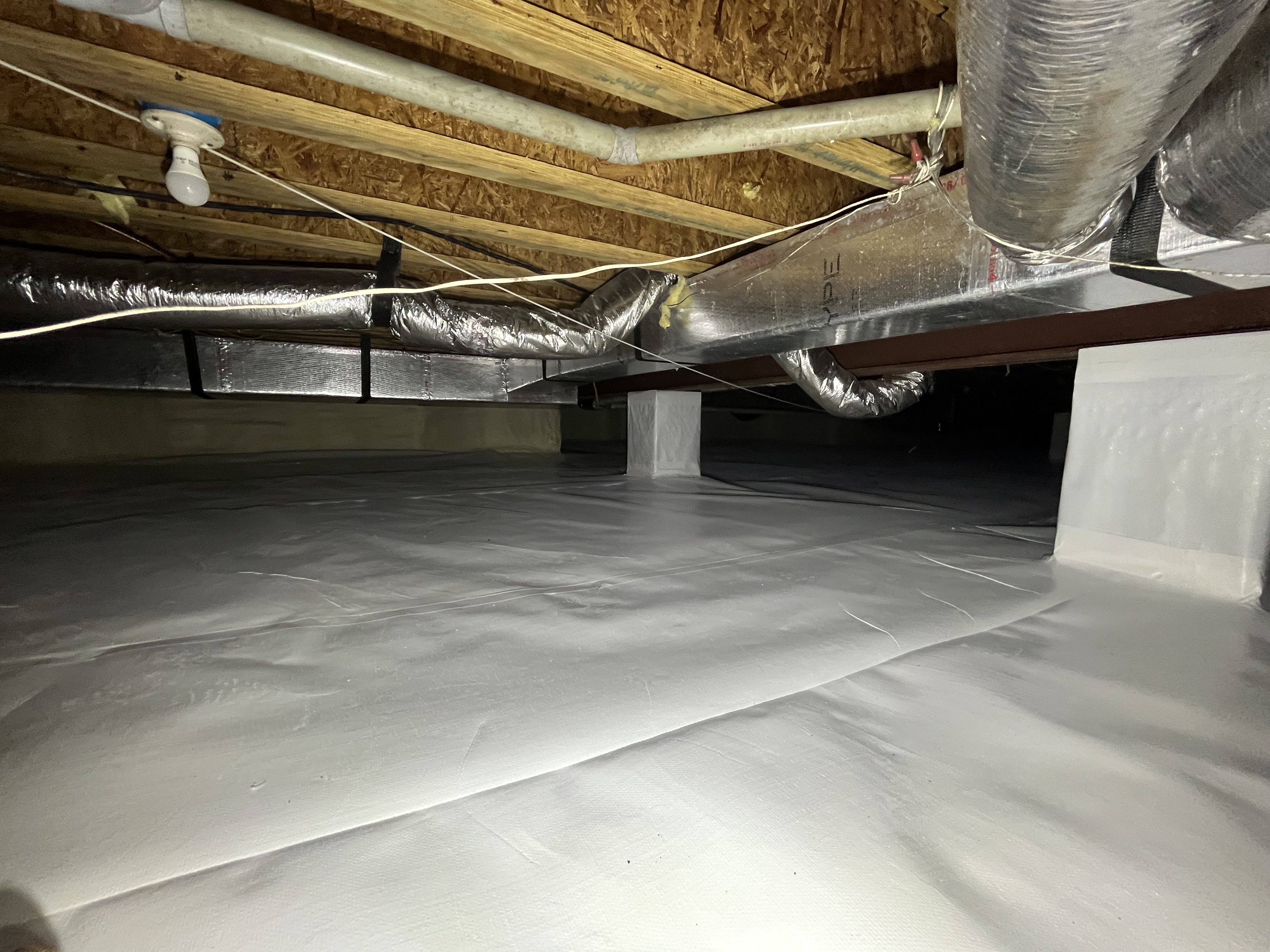
Encapsulation seals the crawl space from outside air and brings it inside the home’s protected thermal and air boundary, helping create a cleaner, drier, and healthier environment throughout the home.
Diagnostic Signs: Is Your Crawl Space a Problem?
It’s not always obvious that a crawl space is wet. However, your home will often leave clues. Look for these signs that moisture is winning the battle under your floors:
- Musty Odors: That "old house" smell is rarely just age; it’s frequently the scent of mold or damp wood circulating from below.
- High Indoor Humidity: If your HVAC system is struggling to keep the house comfortable, it may be fighting against a moisture load rising from the crawl space.
- Uneven Floors: If floors feel cold in the winter or damp to the touch, the underlying moisture is likely compromising the insulation and wood framing.
- Allergy Symptoms: If you or your family members find that allergies flare up while indoors, it may be a reaction to airborne mold spores traveling up from the crawl space.
- Visible Mold/Rot: If you can safely access the area, look for dark patches on joists or insulation that is sagging, wet, or discolored.
The Mistake of Traditional Wet Basement Fixes
For decades, the standard practice for crawl space contractors was to vent crawl spaces, assuming that outdoor air would "dry out" the area. Here on the Eastern Shore, we know that doesn’t work. When you vent a crawl space in our humid climate, you aren’t introducing fresh air; you’re introducing hot, wet air. That air hits the cool surfaces beneath your home, reaches its dew point, and creates the condensation that leads to mold, wood rot, and rusted HVAC components.
Simply swapping out insulation or ignoring the moisture doesn't address the root cause. You are left with the same moisture environment, just with new materials that will eventually suffer the same fate.
The Solution: A Diagnostic, Permanent Approach
Every home has unique moisture pathways, whether it's groundwater seepage, poor exterior grading, or high humidity. At Total Home Performance, we start with a Healthy Home Assessment. Instead of guessing, we use diagnostic tools to identify exactly how moisture is entering your crawl space and how it's affecting the rest of your home.
Often, the permanent solution is crawl space encapsulation. By meticulously air-sealing the space, installing a high-quality vapor barrier, and conditioning the air, we bring your crawl space inside the thermal envelope of your home. This eliminates the source of the moisture, protects your structural wood and HVAC equipment, and cleans the air circulating through your living spaces.