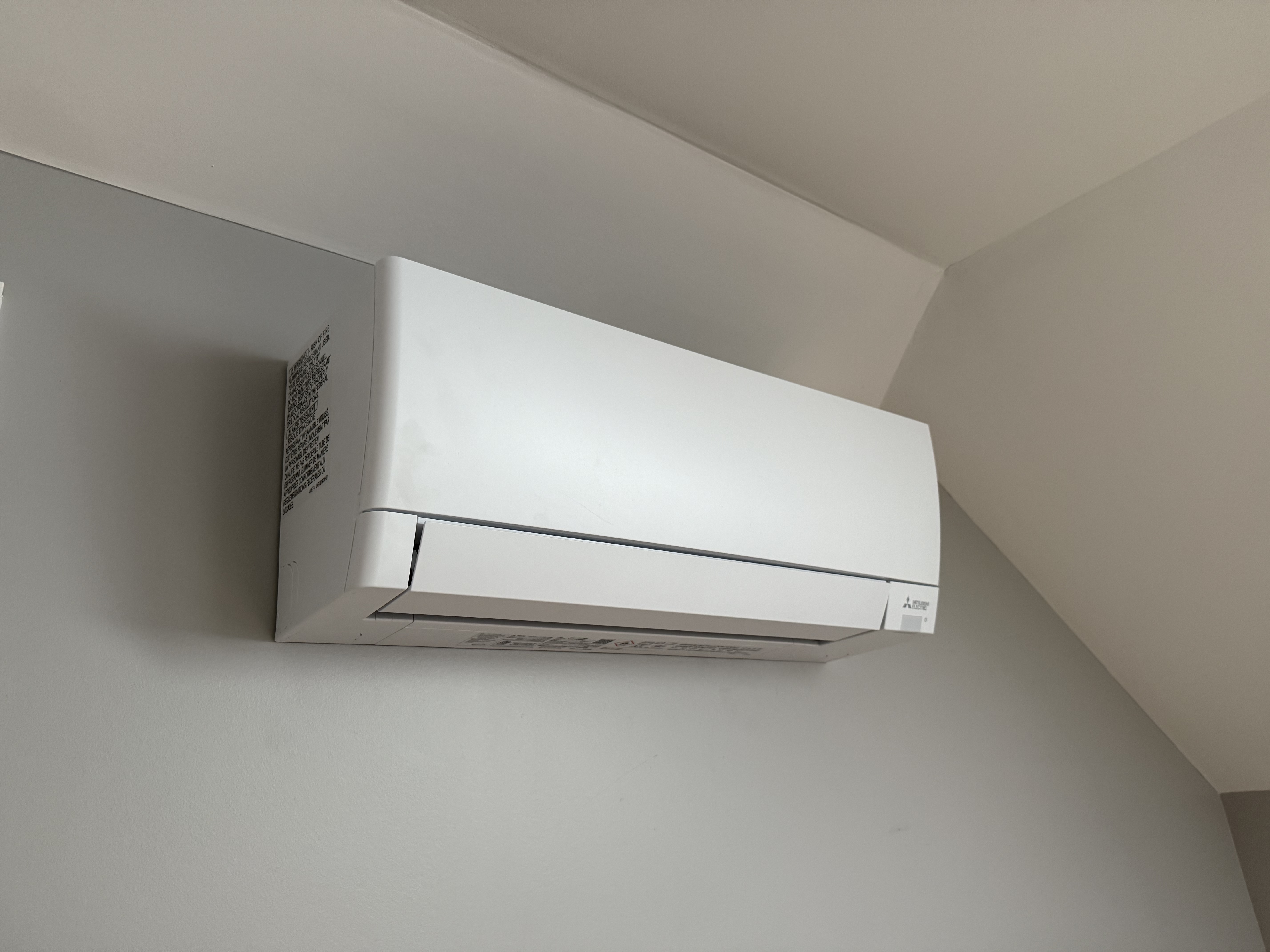
Many homeowners are turning to ductless mini-split heat pumps for their incredible efficiency and zone-by-zone comfort control. They are a brilliant solution for everything from home additions and finished basements to entire homes in the Eastern Shore, MD area. But if you’re concerned about aesthetics, and you don’t want a unit dominating your main living room wall, you might wonder if a mini-split can be installed on a less visible, interior wall.
This is a specific, excellent question because the answer involves describing the core of how the system works and requires the kind of building science diagnostic thinking that separates a specialty contractor from a standard HVAC installer.
So, can a mini-split heat pump unit be installed on an interior wall?
The short answer is yes. It is absolutely possible, but it requires more advanced planning, specialized skill, and a deeper understanding of home architecture to pull off seamlessly.
The Standard Installation: Why Exterior Walls Are Easier (and Cheaper)
While an exterior wall is usually the easiest and most budget-friendly option, it is not the only option. At Total Home Performance, we specialize in whole-home comfort solutions, which means we prioritize the marriage of results and aesthetics over just taking the path of least resistance. To understand why an interior wall installation is tricky, you have to understand the line set.
{Great place for an image—I have one from an hp install at my own home if we need one}
The line set is the bundle of lines and wiring that connects the indoor unit (the head) to the outdoor unit (the condenser). This bundle contains:
-
Refrigerant Lines: Two copper lines that carry the refrigerant back and forth.
-
Condensate Drain Line: A tube that carries away the water (condensate) pulled from the air by the indoor coil.
-
Power and Communication Wiring: The electrical connections that power the unit and allow the indoor and outdoor components to talk to each other.
When you mount the indoor unit on an exterior wall, the installer can drill a single hole directly behind the unit, run the line set a very short distance, and conceal the lines with a cosmetic line-hide cover on the outside of the home until they reach the outdoor condenser. It’s fast, simple, and minimizes labor.
Making the Interior Wall Work: The Installation Challenges
When the unit is mounted on an interior wall, the line set has to travel through the internal structure of the house, through the wall cavity, potentially through the attic or crawl space, and then eventually exit to the exterior unit.
This creates several logistical challenges that a standard HVAC tech might not want to tackle:
1. Line Set Concealment
The biggest challenge is hiding the line set and running it to the outside. This often requires:
- Carefully routing the lines through existing framing or drilling new holes that must be later sealed.
- Utilizing attic space, basement ceilings, or the back of closets for the line set’s path.
- Placing the outdoor unit strategically to minimize the line set run while remaining discreet.
2. Condensate Drainage
The drain line relies on gravity to move water away from the indoor unit. Routing a drain line over long distances, especially through a ceiling or attic, requires maintaining a consistent downward slope. If a gravity drain isn't possible, a secondary condensate pump must be installed to push the water to the outside. This adds complexity and a small, quiet piece of mechanical equipment.
3. Maintaining the Building Envelope
This is the Total Home Performance difference. Anytime we penetrate a wall, interior or exterior, our primary concern is air sealing. We ensure the line set pass-through is fully sealed against air leakage to prevent energy loss and block moisture pathways that could lead to mold or comfort issues. A poor seal negates the efficiency benefits of the mini-split itself. To see how we manage the base of your home’s performance, learn more about our air sealing and insulation services.
When Total Home Performance Can Make Interior Walls Work
While interior wall installation isn’t the most common, it’s not unheard of. This is often necessary when:
- You need better air distribution: An interior, central location can sometimes provide better air coverage to multiple rooms (especially in an open floor plan) than a unit tucked into a corner on an exterior wall.
- The exterior wall space is already compromised: Exterior walls might have windows, doors, or architectural features that limit placement options.
- Aesthetics are paramount: A homeowner simply prefers the indoor unit to be out of sight or in a less-used room.
Beyond the Wall: Alternative Mini-Split Indoor Unit Mounts
The wall-mounted unit (the most common type) isn’t your only option for a ductless system. If you want maximum concealment, mini-splits offer several other indoor unit types that can solve placement challenges:
1. Ceiling Cassette Mounts
These units are installed flush with the ceiling, distributing air from a central panel. They are incredibly discreet and are often the preferred option for larger rooms where a central cooling point is needed. The line set and drainage are run entirely above the ceiling.
2. Floor Console Mounts
Sometimes called “floor-mounted heat pumps,” these sit low on the wall, resembling a traditional radiator. They are ideal for rooms with low walls, like sunrooms, or for homeowners who prefer the feel of heat coming from the floor. The line set typically runs through the floor cavity or directly out the bottom.
3. Concealed Ducted Units
For a true “hidden” system, small ductless air handlers can be installed in an attic or crawl space, distributing air through short, dedicated runs of ductwork to vents in the ceiling or high on a wall. This provides the efficiency of a ductless system with the appearance of a traditional central system.
The Whole-Home Performance Foundation: Before the Install
No matter where you install your mini-split, on an exterior wall, an interior wall, or in the ceiling, the system can only be as efficient as the home it’s installed in.
A new, perfectly placed heat pump will still struggle and run up high energy bills if it’s trying to condition air that is constantly escaping through gaps and cracks. That cold air infiltrating from an unsealed crawl space or warm, humid air entering through a leaky attic forces your mini-split to work harder than necessary.
This is why, as Eastern Shore’s home comfort and energy efficiency experts, we always recommend a comprehensive assessment. Before we focus on the location of the new unit, we confirm that the foundation of your home’s energy efficiency, your insulation and air sealing, is solid.
When you combine a perfectly sized and expertly installed mini-split system with a high-performing building envelope, you don’t just get a new comfort system; you get permanent, whole-home performance.