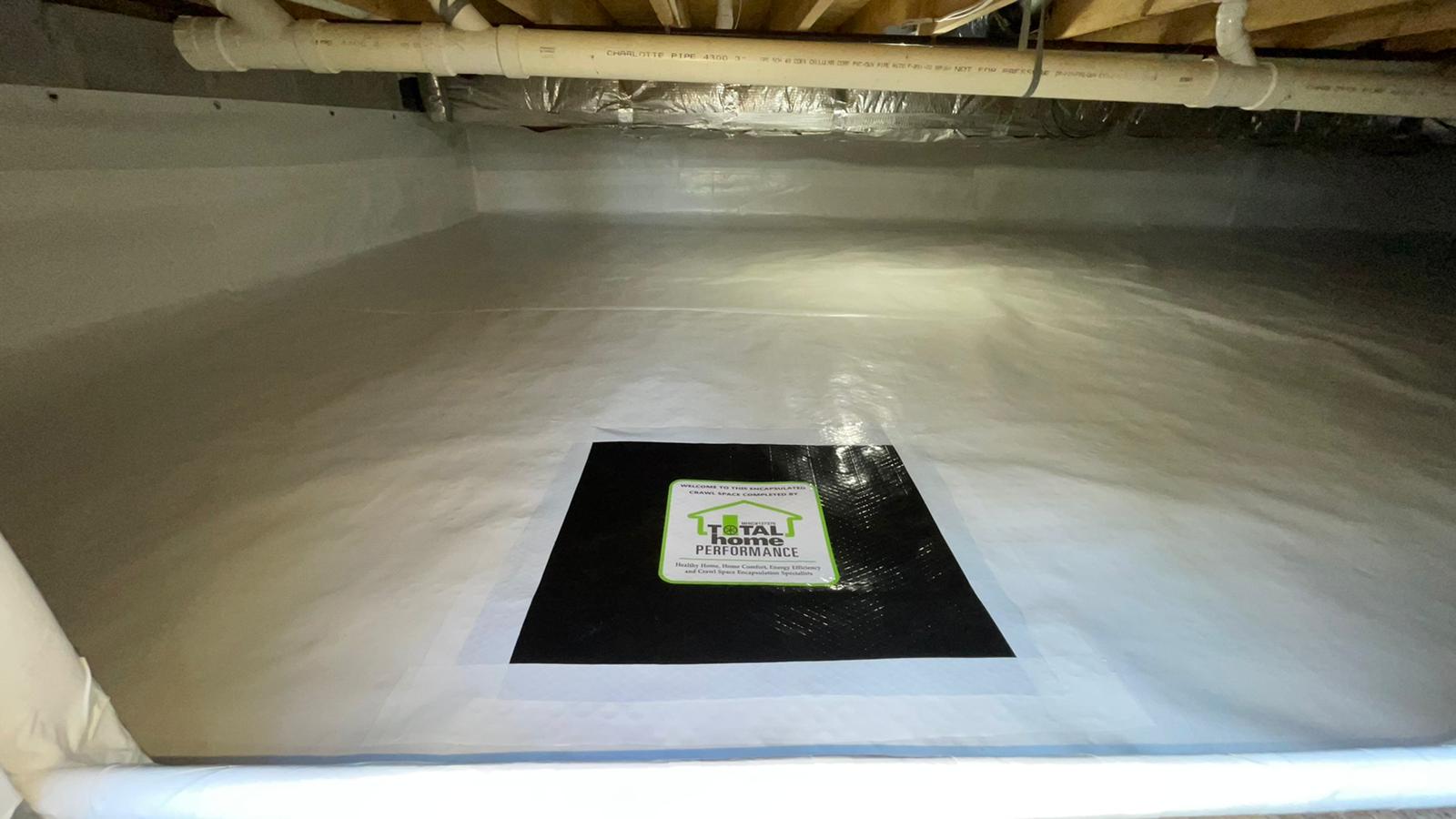
If you have been researching ways to improve your home’s comfort or reduce energy bills, you have likely come across the term "crawl space encapsulation." While it is a known term in home improvement circles and conversations, it is often misunderstood.
At Total Home Performance, we believe homeowners deserve to understand the building science behind the systems in their homes. Crawl space encapsulation is not just about laying down some waterproof plastic; it is a fundamental shift in how your home manages moisture, airflow, and energy efficiency.
What is Crawl Space Encapsulation?
In building science, we categorize a home by its "thermal boundary", which is the term for the system that separates the indoor environment from the outdoors. Most older homes on the Eastern Shore were built with vented crawl spaces, which essentially treat the crawl space as an extension of the outdoor environment.
Crawl space encapsulation is the process of bringing that crawl space inside your home’s conditioned thermal boundary. By sealing the space off from the humid outdoor air and ground moisture, we transform a neglected, potentially hazardous area into a clean, dry, and protected part of your home’s structure.
Why Eastern Shore Homes Require a Scientific Approach
Our coastal climate here in Maryland presents a specific challenge: high relative humidity and significant temperature shifts.
Traditional vented crawl spaces were built on the assumption that "fresh air" would dry out the space. In reality, the opposite happens. When warm, humid outdoor air enters a cool crawl space, it condenses on cool surfaces like ductwork, pipes, and floor joists. This creates the ideal environment for mold and rot.
Because your crawl space is the foundation of your home, these issues don't stay contained downstairs. Through a process called the "stack effect," air from your crawl space is naturally pulled up into your living areas, carrying moisture, mold spores, and musty odors with it. Treating the crawl space as an isolated area is a mistake; it is an interconnected part of your home’s system, and changes there will affect how your whole home feels.
The Total Home Performance Encapsulation Process
We do not believe in "one-size-fits-all" packages. Every home is unique, and our process is rooted in a diagnostic-first approach.
- Diagnostic Inspection (Energy Audit): We start by evaluating the entire home. We look for bulk water issues, structural damage, and air leakage pathways. We must diagnose the root cause of the moisture before we seal anything.
- Vapor Barrier Installation: We install a high-quality, reinforced polyethylene vapor barrier. We don't just lay it on the floor; we meticulously seal the seams, walls, and piers to prevent moisture migration from the earth.
- Air Sealing & Insulation: We use spray foam to seal rim joists and vents, creating an airtight thermal boundary. This step is critical in stopping the stack effect and prevents unconditioned outdoor air from infiltrating your home.
- Mechanical Conditioning (When necessary): Once the space is sealed and airtight, we evaluate the environment. If our diagnostics show that humidity levels remain an issue, we may incorporate a commercial-grade dehumidifier. This is a prescriptive solution based on your home's specific needs, not a default requirement.
Sealed vs. Encapsulated: Why the Difference Matters
You may see contractors offering crawl space services that involve nothing more than laying thin plastic on the ground. This is a temporary approach that will eventually fail because it does not address the walls, the rim joists (where most air leaks occur), or the humidity levels.
True encapsulation is a comprehensive system. It addresses the floor, the walls, the air-leakage points, and the moisture control in one integrated solution. We don't just cover the problem; we solve it.
How We Test for Performance
We don't just walk away when the work is done. We validate that the encapsulation is performing exactly as intended.
We measure success through:
- Moisture Levels: Ensuring the environment stays in a range that inhibits mold growth.
- Building Envelope Integrity: Verifying that air infiltration points are successfully sealed.
- System Efficiency: Observing how stabilizing the crawl space reduces the workload on your HVAC system, leading to better comfort and lower energy waste.
Are you ready to see if your crawl space is the root cause of your home’s comfort or air quality issues? Schedule a Whole-Home Performance Assessment with Total Home Performance today.
Frequently Asked Questions About Crawl Space Encapsulation
1. What is crawl space encapsulation?
It is the process of sealing your crawl space from the outside environment and bringing it into your home’s "conditioned" space. This prevents moisture, humidity, and pests from entering your home.
2. What is the difference between "sealed" and "encapsulated"?
A "sealed" crawl space is often an incomplete fix, typically involving just a ground vapor barrier. "Encapsulation" is a comprehensive, whole-home system that includes sealing the floor and walls, air sealing vents and rim joists, insulating the boundary, and conditioning the air.
3. How do I know if my crawl space is a problem?
Common indicators include musty smells in your home, uneven floor temperatures, visible mold on floor joists, or allergy symptoms that worsen when you are inside. If you suspect an issue, the most reliable step is a professional diagnostic assessment.