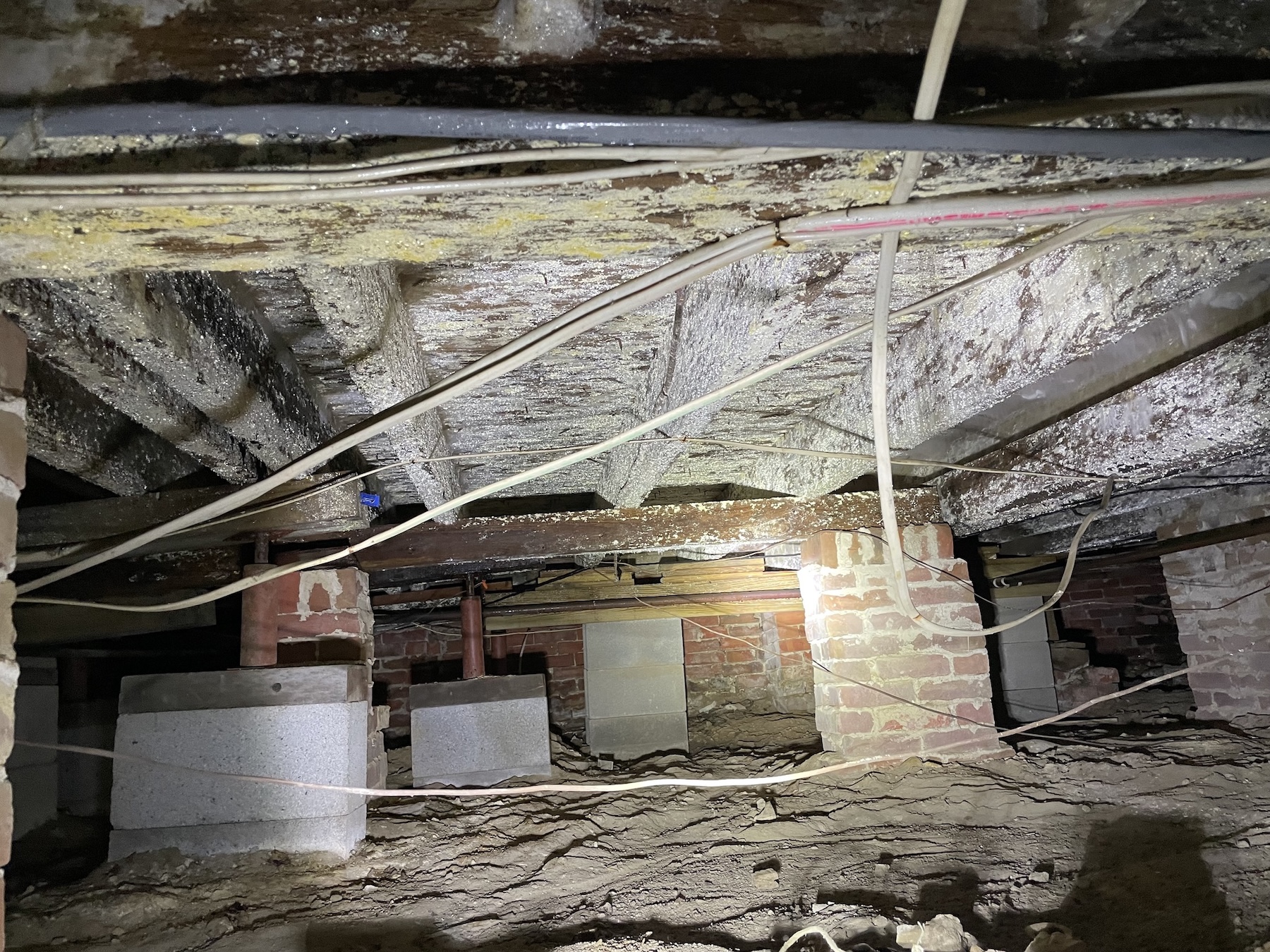
Finding mold anywhere in your house can be alarming, but crawl space mold is a common problem in Eastern Shore homes, and it should be resolved the right way. Fortunately, it can be.
If you’re searching for how to get rid of mold in a crawl space, the most important thing to know is this:
Mold removal alone is not enough.
To permanently eliminate crawl space mold, you must remove it and then address the recurring moisture that allowed it to pop up in the first place. Below, we’ll explain how crawl space mold removal works, what doesn’t actually fix the problem, and how to keep mold from coming back.
How to Remove Mold in a Crawl Space Under Your House
If mold is present in your crawl space, it needs to be physically removed. There are two main approaches, but only one reliably works long-term.
Professional Crawl Space Mold Removal
Professional crawl space mold remediation is the safest and most effective way to get rid of mold under your house.
At Total Home Performance, when we remove mold from crawl spaces, we make sure to:
- Remove mold from contaminated surfaces and materials
- Safely dispose of damaged insulation or debris
- Treat affected areas to prevent regrowth
- Identify how moisture is entering the crawl space
This approach ensures mold is actually eliminated, not just wiped off visible surfaces.
The Issues with DIY Crawl Space Mold Removal
Some homeowners attempt to remove crawl space mold using bleach, vinegar, or store-bought cleaners. While this may remove surface staining and the mold you can easily see, it rarely eliminates mold spores completely.
DIY removal often fails because:
- Mold grows inside porous materials like wood and insulation
- Missed areas allow mold to quickly return
- Moisture problems remain unresolved
In many cases, DIY attempts only delay the need for professional crawl space mold remediation.
What Doesn’t Work for Crawl Space Mold
This is where many homeowners go wrong.
Bleach and Surface Cleaners
Bleach may lighten stains, but it does not penetrate wood or kill mold at the root.
Dehumidifiers Alone
A dehumidifier can help control humidity, but it will not remove existing mold or stop water intrusion by itself.
Crawl Space Encapsulation Without Mold Removal
Encapsulation does not kill mold. Sealing over active mold can actually trap spores and worsen indoor air quality. Mold must always be removed before encapsulation.
Why Is There Mold in Your Crawl Space?
Crawl space mold only grows when moisture is present. Common causes include:
- Open crawl space vents that allow humid and contaminated air inside
- Ground moisture rising without a vapor barrier
- Air leaks and gaps in an unsealed crawl space
- Poor grading or drainage around the foundation
- Plumbing leaks, even small ones
If the moisture source isn’t identified and corrected, mold will continue to return, no matter how many times it’s cleaned.
Will Crawl Space Encapsulation Kill Mold?
No, encapsulation alone does not kill mold.
However, when combined with proper crawl space mold removal, encapsulation is the most effective way to prevent mold from coming back.
Crawl space encapsulation works by:
- Sealing vents and air leaks to better control ventilation
- Installing a heavy-duty vapor barrier on floors and walls
- Insulating and conditioning the crawl space
- Controlling humidity with dehumidification
Once mold is removed, encapsulation stops moisture at the source and keeps the crawl space dry, clean, and mold-free.
Crawl Space Mold Removal Experts You Can Trust
At Total Home Performance, we don’t just remove mold, we solve the moisture problems that allow it to grow.
If you’re dealing with mold in your crawl space and want a solution that lasts, our team is here to help.