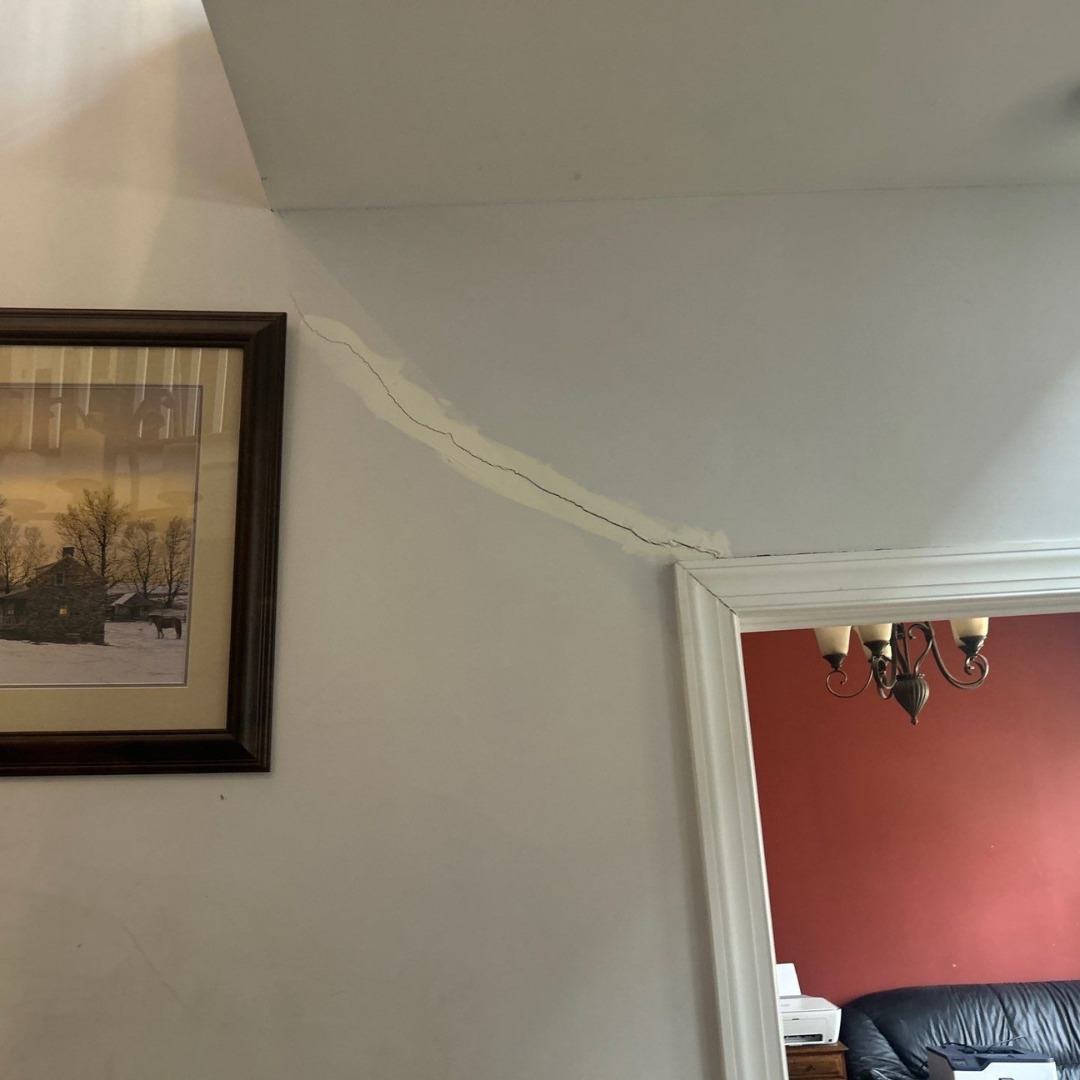
If you have wide, deep, worsening, or multiple cracks on your walls and ceilings, you should be concerned. These types of cracks can be a sign of foundation problems or structural damage, and it’s important to have them checked out by a professional. Thin, solitary cracks, on the other hand, are usually nothing to worry about.
When are Ceiling & Wall Cracks a Problem?
Some of the most common signs of a dangerous wall or ceiling crack include:
- Wide Cracks - A crack wider than about 1/16 of an inch should be checked by a professional.
- Growing Cracks - A crack that gets longer, deeper, or wider is a sign of foundation or structural damage.
- Leaking Cracks - Water coming in through cracks when it rains is always a bad sign. Even if the crack isn’t a structural problem, it could become one with water and mold coming in.
- Multiple Cracks - Cracks showing up in multiple places, such as one on the ceiling and a few on the walls, is concerning.
- Stair Step Cracks - If one side of the crack is higher than the other, or creates a stair step pattern, you have a problem. This is one of the worst types of cracks to find in your home and an indicator that the structure is shifting.
- Additional Problems in the House - Cracked walls and ceilings that show up with other symptoms, like sagging or bowing ceilings, uneven or sagging floors, and sticking windows/doors, are a sign of a deeper structural problem.
Foundation problems that cause wall and ceiling cracks will get worse and more expensive to fix the longer you ignore them! Schedule an evaluation with Total Home Performance today.
When are Ceiling & Wall Cracks Normal?
Cracks in the ceiling and drywall are not always dangerous or even problematic. It’s normal for cracks to appear as your house settles, and they may even grow or shrink slightly as the seasons change. In most cases, that’s not a big deal. It’s usually just a cosmetic issue, but it doesn’t hurt to have us come out to take a look, just to be on the safe side.
- Hairline Cracks - Tiny hairline cracks less than 1/16 inch are usually nothing to worry about.
- Straight Cracks - Thin straight cracks are generally the least concerning.
- Singular Crack - Bad cracks tend to come in multiples. If it’s just one small one with no other issues in the house, it’s probably fine.
- Cracks in Plaster Ceilings - Plaster doesn’t hold up very well on ceilings over time because it’s heavy. As it settles, it can pull away and crack slightly. This is just a cosmetic issue.
How to Check if a Crack in the Wall or Ceiling Is Serious
There are a few ways to check the severity of a wall or ceiling crack before you call a professional. We recommend:
1. Pencil Test to Monitor Growth
Draw a mark on the wall at both ends of the crack. Wait a week or two and check to see if the crack has grown. If it’s getting bigger, you should have it looked at.
2. Stick Your Pinky Into It
If a wall or ceiling crack is big enough to stick a pinky into, it’s big enough to be worried about.
3. Push on the Edges to See if it Moves
Push gently on the edges of the crack. If one or both sides move, you should have it looked at.
4. Fix It & See if It Comes Back
Repair the crack and see if it holds. If the crack reappears in the same place or the same problem pops up somewhere else, you should bring in a professional to take a look.
FAQs About Wall & Ceiling Cracks
Does a ceiling crack mean your house is unstable?
Not necessarily. Hairline ceiling cracks are often caused by a house’s natural movement and settling. If the crack is wide, growing, or accompanied by other problems like sticking windows, it could be a sign of structural damage. Either way, it’s worth having it checked out to be sure.
How much wall cracking is acceptable?
A few wall cracks thinner than 1/16 are generally considered a cosmetic problem, not a structural one. You can repair them with filler like caulk or grout if they bother you.
Do cracks in drywall or plaster always mean there’s a foundation problem?
No. Cracks in drywall or plaster can be caused by age, wear and tear, or improper installation methods. If they’re wide, deep, or growing, however, they may be a sign of a foundation problem.
Need a Wall or Ceiling Crack Inspection on the Eastern Shore of Maryland?
Cracks in your walls or ceilings are often cosmetic, but that can also be a sign of serious structural damage. It’s easy to get them looked at and not worth the risk of skipping an inspection.
At Total Home Performance, we provide inspection services for wall and ceiling cracks in all Maryland Eastern Shore counties, as well as Anne Arundel County and the Sussex County area in Delaware. Reach out to us today to schedule an inspection. We’ll help set your mind at ease.