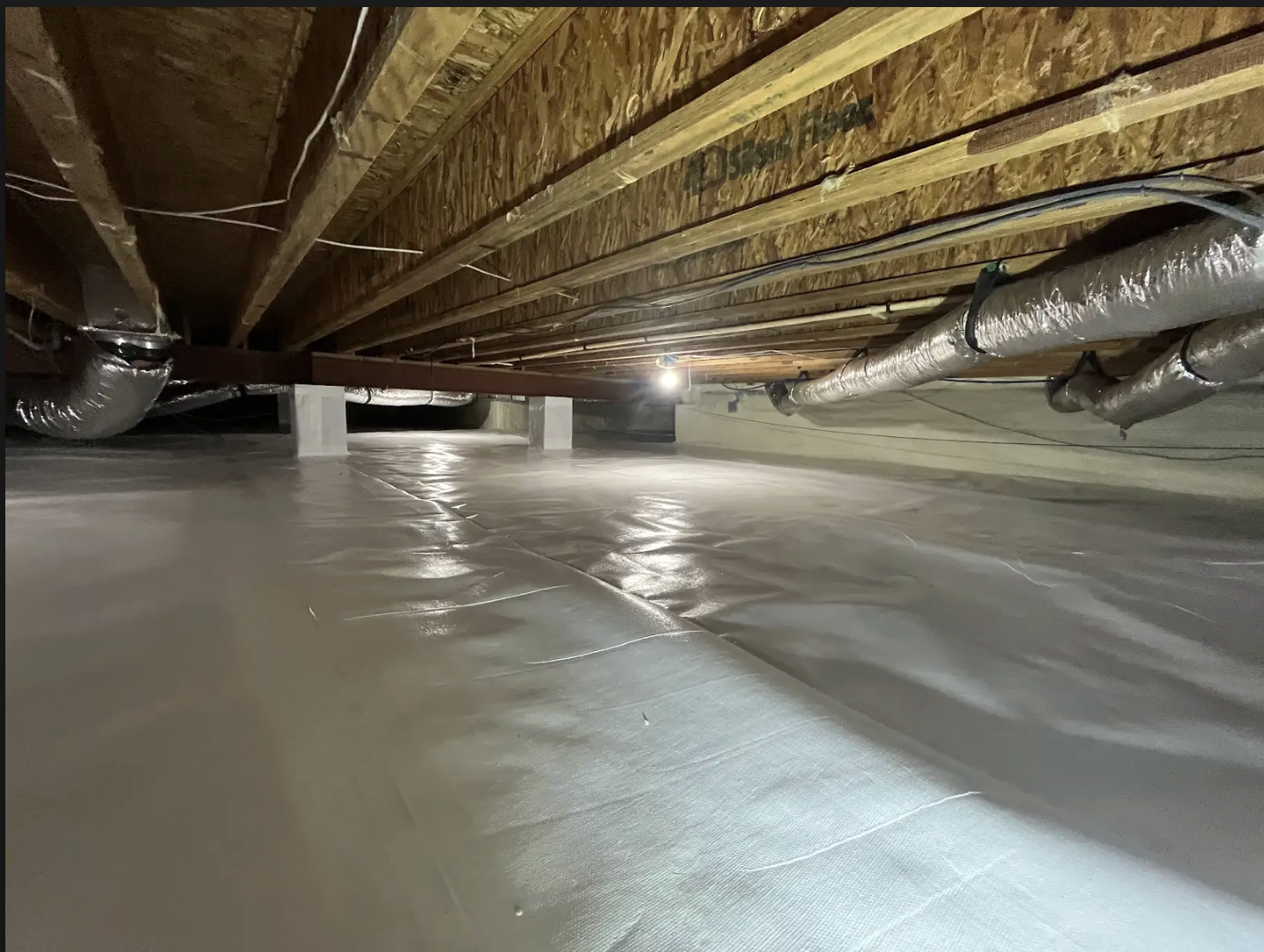
If the floor over your crawl space is cold, it’s probably because it’s vented and/or poorly insulated. Open and uninsulated crawl spaces feed cold air into your house during the winter, which can make your floors feel like ice. For most houses in the Mid-Atlantic, crawl space encapsulation is the best solution.
Best Fixes for a Cold Floor Over the Crawl Space
1. Crawl Space Encapsulation
Crawl space encapsulation is a comprehensive solution that stops cold floors and solves a whole bunch of other problems, like moisture, mold, and energy efficiency issues, all at the same time.
Our crawl space encapsulation services in Easton, MD, and the surrounding areas include:
- Insulation & Air Sealing - Insulation and air sealing hold heat in and block cold air out. Your crawl space stays warmer as a result, so it’s not feeding cold into the rooms above it.
- Vapor Barrier - A thick vapor barrier covers crawlspace floor and walls so moisture can’t seep in.
- Dehumidifier - A dehumidifier controls humidity so your crawl space stays dry.
- French Drain – A French drain collects and redirects groundwater away from the crawl space, preventing water buildup and helping manage moisture around the foundation.
- Sump Pump – A sump pump removes collected water from the crawl space and safely discharges it away from the home, providing protection against flooding and water intrusion.
Did you know: Crawl space encapsulation is eligible for up to $10,000 in utility rebates through the Home Performance with ENERGY STAR program. Total Home Performance is a participating contractor. Reach out now to see if you qualify!
2. Close Crawl Space Vents
If your crawl space has vents, you should close them and then encapsulate your crawl space to seal vents off completely. Open vents let cold air flood your crawl space, which is then sucked up into the rooms above it. Plus, they’re a wide-open door for critters looking for a warm place to spend the winter, and melting snow that can flood your crawl space and lead to mold.
3. Attic Insulation (Surprisingly)
Attic insulation and air sealing can, surprisingly, help with a cold first floor. This is because of something called the stack effect. When your house loses heat through the attic, it pulls more air in to replace what was lost, usually through the bottom of your house, aka your crawl space. Insulating the attic stops heat from escaping, eliminating the stack effect.
Why Are the Floors Above Your Crawl Space So Cold?
If the floors above your crawl space feel cold, it’s usually because the crawl space below is cold. Imagine it's 42 degrees outside. If your crawl space is open and unsealed, it’s going to be just as cold in there as it is outside. That means, there’s a 42-degree room right below your house, sucking the heat out of it.
Top reasons a crawl space gets cold (usually a combination)
- Missing, old, or poorly installed insulation
- Air leaks
- Unsealed rim joists/band joists
FAQs About Cold Floors in a House
Is it normal for a crawl space to be cold?
It’s normal for a crawl space to be cool but not excessively cold. A properly sealed and insulated crawl space will be significantly warmer than it is outside during the winter, solving comfort problems like cold floors.
How do I properly solve cold floors due to a vented crawl space?
The best solution is to seal the vents and fully encapsulate your crawl space. This will help it maintain a consistently warmer temperature during the winter and prevent cold floors.
How do you insulate the floor above a crawl space?
In most cases, crawl space encapsulation will work better than insulating the floor.
Want an Expert Opinion? Call Total Home Performance for a Crawl Space Inspection
If you’re tired of wearing slippers inside all winter, it’s time to do something about your crawl space problem. Total Home Performance can help. We’re an independent and locally owned crawl space company that’s been in business for over 16 years. We’ve fixed thousands of crawl spaces in the Chesapeake Bay area, and are here to help you find the right crawl space solution for your home.